This report catalogs the policy choices, demonstration projects, and waivers each state uses to administer SNAP, highlighting how states adapt federal rules to local needs.
This resource provides an overview of the Supplemental Nutrition Assistance Program Employment & Training (SNAP E&T) program, highlighting state implementation strategies, funding mechanisms, and policy opportunities to strengthen workforce participation among SNAP recipients.
American Public Human Services Association (APHSA)
This article explores innovative strategies to improve access to public benefits by reducing administrative barriers and leveraging technology for a more user-friendly experience.
Through deeply reported case studies and insights from focus groups, this report provides an in-depth look at the impact of pandemic-era government spending on families.
A detailed guide outlining how states can minimize coverage losses and administrative burden while implementing new Medicaid work requirements established under the 2025 federal reconciliation law.
Report by the Aspen Institute discussing Benefits21, a multi-stakeholder, multi-faceted initiative to integrate and modernize benefits systems. This paper provides an overview of Benefits21, along with a discussion of the shortcomings of current public and private benefit systems.
This playbook offers a comprehensive guide to enhancing unemployment benefits systems, focusing on claimant-centric approaches, equitable access, and actionable steps for state agencies.
This article analyzes the strategic use of public policy as a tool for reshaping public opinion. Though progressive revisionists in the 1990s argued that reforming welfare could produce a public more willing to invest in anti-poverty efforts, welfare reform in the 1990s did little to shift public opinion. This study investigates the general conditions under which mass feedback effects should be viewed as more or less likely.
This analysis explores the potential reduction in poverty rates across all U.S. states if every eligible individual received full benefits from seven key safety net programs, highlighting significant decreases in overall and child poverty.
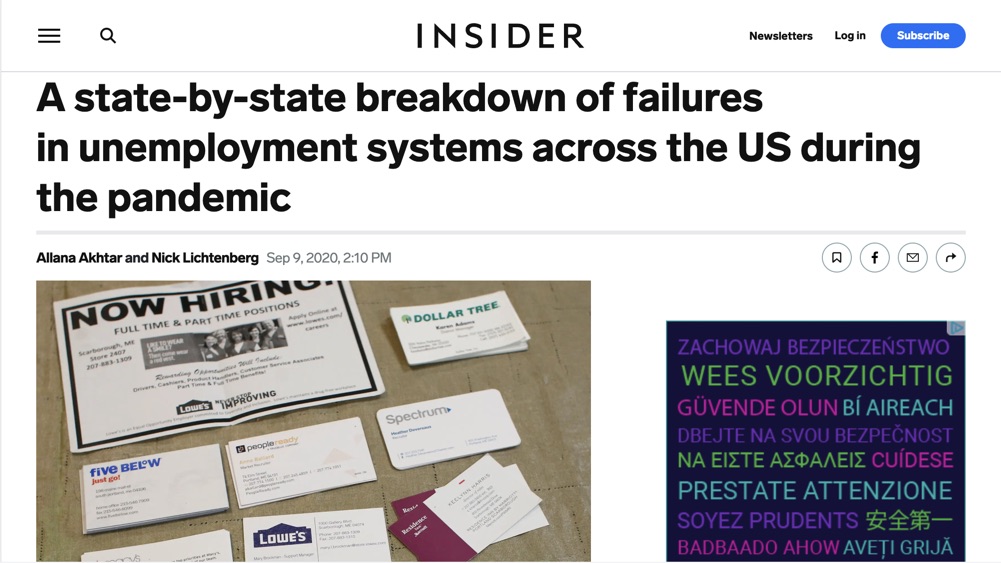
This article examines how outdated state unemployment insurance (UI) systems struggled during the COVID-19 pandemic, leading to delays, technical failures, and widespread frustration for job seekers.